
My initial plan was to be a math teacher or a doctor like my parents. I became a software developer by chance … and because of a broken computer.
When I was 10, my father bought me an Amiga computer. It was the kind that you had to connect to your TV because it did not have a monitor.
In the early 90s, this was considered a hi-tech device:
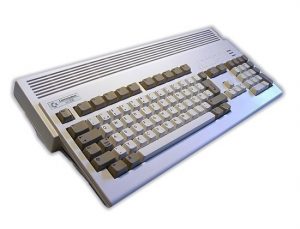
However, the computer was broken and could not be connected to a cassette player. This meant I could not load or play any games on it. Yes, during those times, games were stored on cassette tapes.
The only thing I could do with that computer was run the BASIC programming language on it.
Fortunately, I found a book titled something like "How to Make 10 Games in BASIC." I typed about 3-4 pages of code to get a basic game up and running. These games were very simple, like a red dot chasing two blue dots. I had no idea what I was doing.
Luckily, the BASIC programming language is made of short lines, so it was quite easy to track down typos. Mostly, I was copying the code like a monkey.
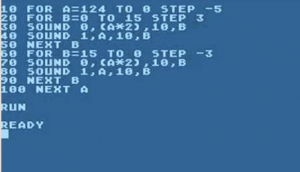
Another downside of not being able to connect this computer to a cassette player was that I had no way to save my code. When the computer was unplugged, I lost all my code and had to start from scratch.
The funny thing was that after writing that code enough times, those strange lines started to make some sense. I began to change the color codes and pixel values to see what would happen, using trial and error.
I felt like a wizard learning spells.
This didn’t have any practical application until high school when I discovered that I could skip many boring classes by participating in computer contests.
From there, I realized I could make this into a job and so on.
So, a few takeaways from the story:
- Programming can be taught at a very young age. I was 10 years old when I started learning to code, and I don’t have a special IQ.
- Video games are good; if it weren’t for the desire to play those video games, I might not be a programmer today. I certainly wouldn’t have been interested in learning to code just to solve math equations.
- In the beginning, it’s okay to just copy. The human brain, especially the brain of children, is excellent at recognizing and learning patterns and adapting them.
Cheers, and happy learning!
📖 Neural Networks from Scratch - Presale
I'm writing a book about the timeless foundational concepts of neural networks for JavaScript developers. Go from if-else to weights and biases by building tiny AI models from scratch!
📖 Neural Networks from Scratch - Presale
I'm writing a book about the timeless foundational concepts of neural networks for JavaScript developers. Go from if-else to weights and biases by building tiny AI models from scratch!