
In the case where we want to build a React search box, or autocomplete text input, a debounce function comes very handy as we don’t want to have the API called for each keystroke of the user.
So, instead of having something like this:
useEffect(() => {
    doApiCall(query)
}, [query]);
We want to have something like this:
useEffect(() => {
    (doApiCall(query)
}, [waitForTheTypingToStop(query)]);
Below is the full code of one possbile solution:
function debounce(callback, time) {
    let interval;
    return () => {
        clearTimeout(interval)
        interval = setTimeout(() => {
                interval = null
                callback(arguments)
            }, time)
    }
}

const App = ({wait = 1000}) => {
    const [query, setQuery] = useState("abc");
    const ref = useRef();

    const onChange = () => console.log("query = ", query)

    useEffect(() => {
        ref.current = onChange
    }, [onChange]);

    const doCallbackWithDebounce = useMemo(() => {
        const callback = () => ref.current()
        return debounce(callback, wait);
    }, []);

    return (<div>
        <p>Input debounced for {wait} ms:</p>
        <input
            value={query}
            onChange={(e) => {
                doCallbackWithDebounce();
                setQuery(e.target.value);
            }} />
    </div>);
}
It will debounce the action used in useEffect() for a given number of milliseconds thus limiting the number of expensive operations, such as API calls:
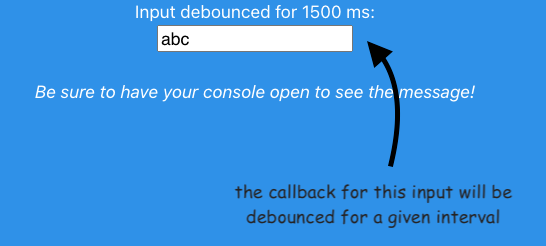
You can checkout the working example here and the full code on my Github.
By the way, if you are interested, I’ve also written this article on why it’s great to use React Strict Mode to double-check for errors when working with useEffect().
📖 Neural Networks from Scratch - Presale
I'm writing a book about the timeless foundational concepts of neural networks for JavaScript developers. Go from if-else to weights and biases by building tiny AI models from scratch!
📖 Neural Networks from Scratch - Presale
I'm writing a book about the timeless foundational concepts of neural networks for JavaScript developers. Go from if-else to weights and biases by building tiny AI models from scratch!